
-
Call Now: (+86) 189 3193 6700
-
Email Now: dongsen202408@gmail.com
-
WhatsApp: +8619527082837
- Send Message


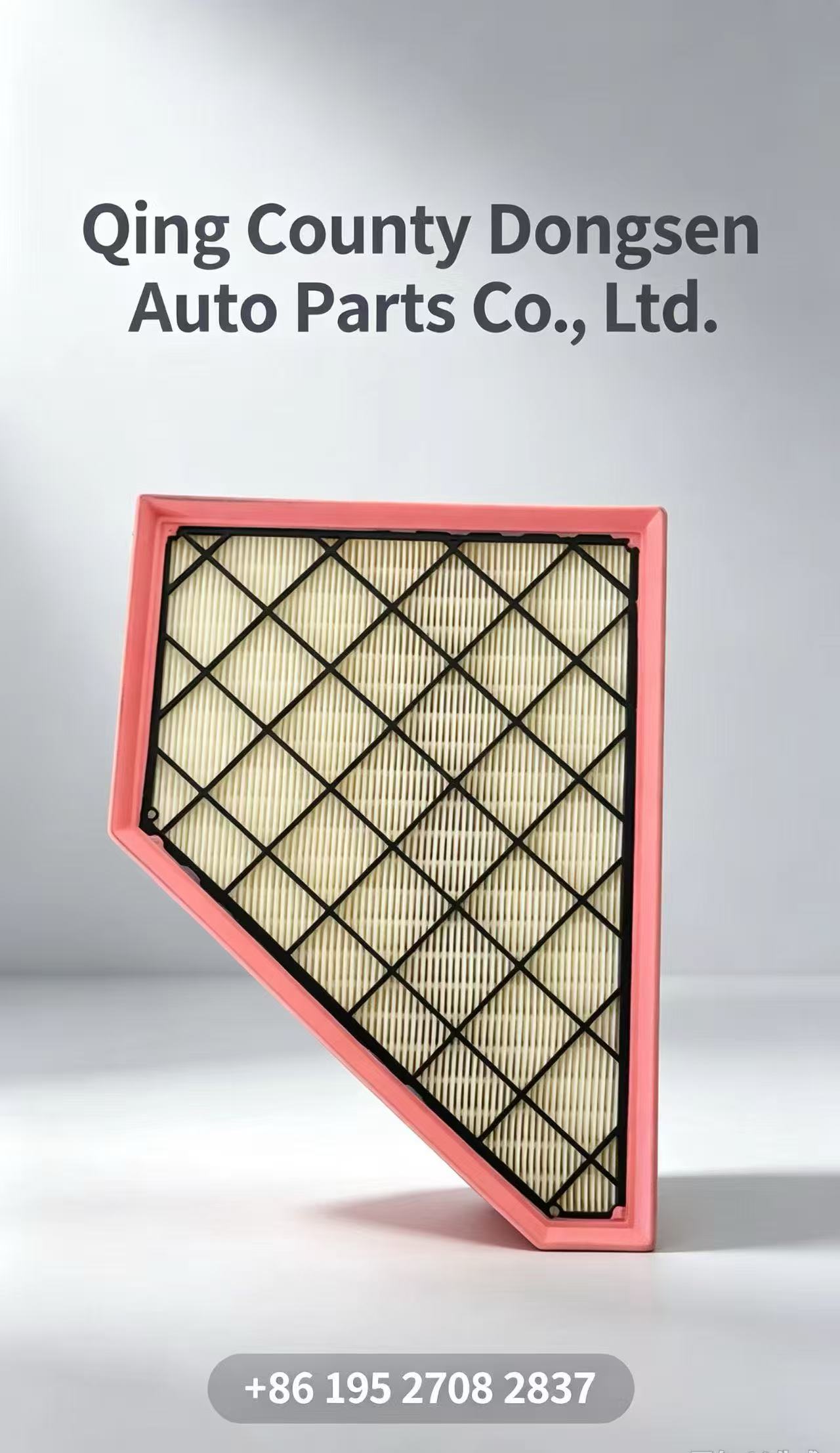
When purchasing replacement car air filters, many buyers judge quality only by price or visual appearance. However, surface looks cannot reflect real filtration performance. To select a qualified air filter for your vehicle fleet or retail customers, there are four core technical indicators you must evaluate carefully: filtration efficiency, dust‑holding capacity, initial airflow restriction and sealing reliability.
Filtration efficiency refers to the filter’s ability to capture particles of specified sizes. Standard‑grade air filters should reliably trap particles above 10 micrometres. Premium synthetic filter media can intercept much finer particles without sacrificing airflow. Low‑quality filters often show high efficiency when brand new, yet fibres break down quickly after absorbing moisture and dust, losing filtration capacity within a short service cycle. Our production line uses long‑fibre cellulose and composite synthetic filter paper with special resin impregnation treatment. The filter medium stays stable under temperature fluctuation, humidity and engine bay vibration, maintaining consistent filtration performance through its whole service life.
Dust‑holding capacity decides how long the air filter can work before becoming clogged. A filter with high dust‑holding capacity absorbs large quantities of contaminants before airflow restriction rises sharply. This means longer replacement intervals and lower maintenance frequency, which creates obvious cost advantages for taxi fleets, delivery vans and vehicles operated in dusty environments. Our R&D team optimises pleat height, pleat spacing and total pleat quantity for each filter model to maximise effective filter area within limited housing space.
Initial airflow restriction is another critical parameter. Some buyers mistakenly believe “the denser the filter paper, the better”. Overly dense media creates excessive air resistance. The engine has to work harder to suck in air, causing power loss and higher fuel consumption. Our technical team balances filtration efficiency and air permeability precisely. Every finished filter sample undergoes airflow pressure‑drop testing to guarantee the resistance stays within the OEM‑equivalent range.
Sealing performance is easily overlooked yet extremely vital. No matter how good the filter paper is, poor edge sealing allows unfiltered dirty air to sneak past the filter element directly into the engine. Our air filters adopt high‑elasticity polyurethane gaskets instead of cheap foam seals. The rubber frame resists engine‑bay oil vapour, high temperature and ageing. After long‑term squeezing inside the air box, it still maintains a tight seal.
Besides standard disposable paper air filters, we also provide customised development services. If you are an auto‑parts brand owner and need air filters with special specifications for your local market, our engineering team can complete sample development according to your drawings, OEM part numbers or vehicle fitment lists. We support private label packaging, custom marking and flexible MOQ arrangements to help your brand expand in the global automotive aftermarket.

Qinghe County Dongsen Auto Parts Co., Ltd. is located in Qinghe County, Xingtai City, Hebei Province. It was established in 2024. Although the company was established a short time ago, it has more than 10 years of production experience. We are a manufacturer specializing in the production of air filters, air conditioning filters and oil filters. The filters produced by our factory serve the domestic and foreign markets and have won unanimous praise from customers in Southeast Asia, Africa, South America and other regions.


Scan and Add to Contact
Scan and Add to Contact