
-
Call Now: (+86) 189 3193 6700
-
Email Now: dongsen202408@gmail.com
-
WhatsApp: (+86) 195 2708 2837
- Send Message


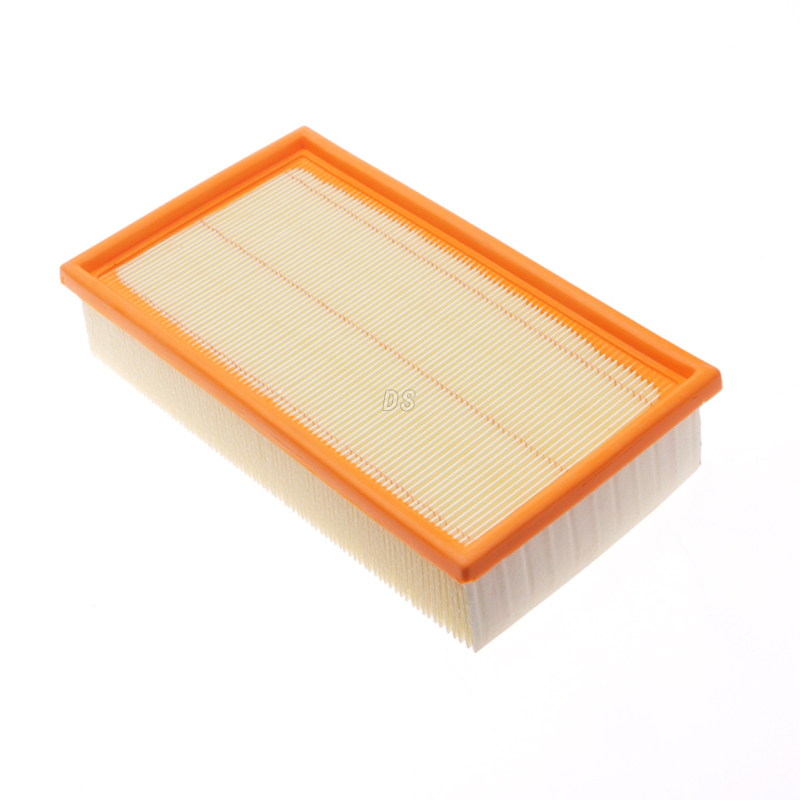
Introduction: A Delicate Respiratory System
For any internal combustion engine — whether in a passenger car, a heavy-duty truck, or a piece of agricultural machinery — clean air is just as critical as clean fuel. But unlike fuel, air cannot be refined or treated before entering the combustion chamber. The only line of defense is the air filter.
Think of it as the engine’s surgical mask. A high-quality air filter must perform two seemingly contradictory jobs simultaneously. First, it must keep out microscopic dust, pollen, soot, and even sand. Second, it must let in an unrestricted, steady flow of oxygen.
Too much filtration often means too much resistance. Too much airflow often means too little protection. Getting this balance right is not just engineering — it is an art. At [Your Company Name], we call it the balance of the mask.
Why Balance Matters More Than You Think
Most people assume that a better air filter simply traps more particles. In reality, an over-efficient filter can do more harm than good.
High filtration efficiency typically requires denser media and smaller pores. The result is higher airflow resistance, also known as pressure drop. The effect on the engine includes oxygen starvation, a richer fuel mixture, incomplete combustion, increased fuel consumption, and power loss.
On the other hand, low resistance usually means larger pores and coarser media. The result is lower filtration efficiency. The effect on the engine includes dust ingression, accelerated cylinder wear, oil contamination, and premature engine failure.
The sweet spot lies exactly where both metrics are optimized — not maximized individually.
To give a practical example, a filter that catches 99.9% of 5-micron particles but causes a 40% higher pressure drop than the OEM specification may reduce engine power by 5 to 8 percent, increase fuel consumption by up to 10 percent, and shorten turbocharger life. That is a hidden cost no fleet manager wants.
Key Parameters That Define the Balance
Several key parameters influence the balance between efficiency and resistance.
The first is media type, which compares cellulose, synthetic, and nanofiber materials. Synthetic media offers smaller fibers, which provides higher efficiency at the same or lower resistance.
The second is pleat density. More pleats mean larger effective filtration area. This reduces face velocity, which lowers resistance and allows higher efficiency.
The third is media thickness. Thicker media creates a more tortuous path for air. This increases efficiency but adds resistance if not compensated by other design elements.
The fourth is thermobonding or resin treatment, which improves structural stability. This prevents pleat collapse under high airflow and is especially important for heavy load conditions.
The Technology Behind Our Balance-First Design
At [Your Company Name], we do not chase one metric at the expense of the other. Our engineering approach is based on three pillars.
The first pillar is gradient density filtration media. Instead of using a single uniform layer, our multilayer gradient design features a coarse outer layer that traps larger particles from 10 to 50 microns, a medium middle layer that captures mid-range contaminants from 5 to 10 microns, and a fine inner layer that blocks sub-5-micron abrasive dust. This structure increases dust holding capacity by up to 35 percent without increasing initial resistance.
The second pillar is optimized pleating geometry. Through computational fluid dynamics simulation, we determine pleat height, pleat spacing, and pleat angle. Too many pleats choke airflow. Too few pleats reduce effective area. Our simulation-driven approach finds the exact optimum for each engine platform, from 1.2-liter gasoline engines to 15-liter diesel turbos.
The third pillar is high-precision manufacturing tolerance. A deviation of plus or minus 0.2 millimeters in pleat spacing may not sound like much, but over a 30-pleat filter, that amounts to 6 millimeters of total variation — enough to create localized high-velocity zones where dust punches through. We maintain automated pleating stations with real-time laser measurement to ensure every filter performs identically to its lab-tested prototype.

Qinghe County Dongsen Auto Parts Co., Ltd. is located in Qinghe County, Xingtai City, Hebei Province. It was established in 2024. Although the company was established a short time ago, it has more than 10 years of production experience. We are a manufacturer specializing in the production of air filters, air conditioning filters and oil filters. The filters produced by our factory serve the domestic and foreign markets and have won unanimous praise from customers in Southeast Asia, Africa, South America and other regions.