
-
Call Now: (+86) 189 3193 6700
-
Email Now: dongsen202408@gmail.com
-
WhatsApp: (+86) 195 2708 2837
- Send Message


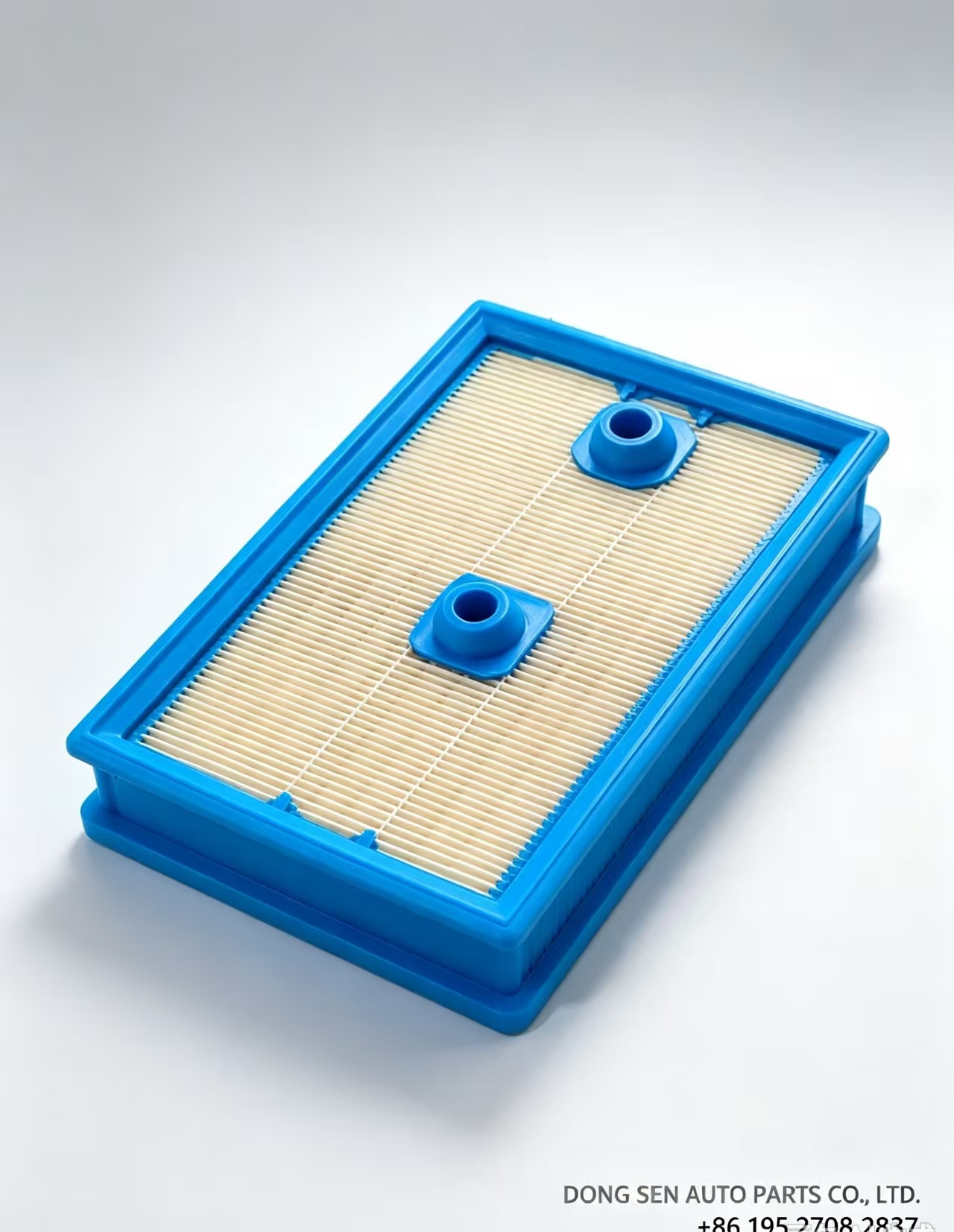
When comparing cabin air filters, most buyers only focus on filter paper material, activated carbon layer and filtration rating, while ignoring an important structural detail: the reinforcing ribs on the filter media. In mass production, ordinary cheap cabin filters use thin filter paper without support ribs. After being installed inside the narrow HVAC housing, these soft pleats are easy to deform, sag and stick together under wind pressure, moisture and temperature changes. As a result, the effective filtration area shrinks greatly, air resistance rises sharply, air volume drops, and the service life is shortened significantly. Reinforced rib technology solves this structural weakness fundamentally and has gradually become a standard feature of OEM-grade and premium aftermarket cabin filters.
The reinforcing ribs are integrated on the surface of filter pleats during the production process. They hold each pleat at a fixed spacing, keep the folding shape stable, and prevent adjacent pleats from closing up under airflow impact. This stable pleat structure guarantees the maximum available filtration area all through the service cycle. Whether facing strong cold airflow from the air conditioner, hot air from the heater, or damp air in rainy days, the filter media will not collapse easily. This advantage becomes more prominent in humid environments. Wet filter paper becomes softer and weaker; without rib support, the filter may deform and block the air duct completely. Reinforced ribs provide lasting mechanical support and maintain smooth air passage, balancing filtration efficiency and air permeability.
The production of ribbed cabin filters requires precise molding and laminating processes. The rib material must have good adhesion with non-woven fabric, good temperature resistance and low odor. Poor rib products will peel off from filter paper after a period of use, or release volatile smell under high temperature inside the dashboard. Reliable manufacturers strictly control raw material formula and production parameters, ensuring that ribs stay firmly bonded without blocking the fiber pores. Every rib spacing is calculated to avoid excessive ribs that reduce the effective filtering area.
For end users, the benefits of reinforced rib cabin filters are tangible. First, the air conditioner maintains stable air output; you will not feel the wind getting weaker quickly after a few months. Second, the filter lasts longer and keeps consistent filtering performance. Third, it reduces extra load on the blower motor, lowering the risk of motor overheating and premature damage. For auto repair shops and wholesale buyers, rib-structured cabin filters also bring fewer after-sales complaints caused by deformation and blockage. When sourcing cabin filters, do not only compare prices. Check whether the pleats keep neat shape and stable spacing — this small structural feature reflects the overall quality level of the filter.

Qinghe County Dongsen Auto Parts Co., Ltd. is located in Qinghe County, Xingtai City, Hebei Province. It was established in 2024. Although the company was established a short time ago, it has more than 10 years of production experience. We are a manufacturer specializing in the production of air filters, air conditioning filters and oil filters. The filters produced by our factory serve the domestic and foreign markets and have won unanimous praise from customers in Southeast Asia, Africa, South America and other regions.