
-
Call Now: (+86) 189 3193 6700
-
Email Now: dongsen202408@gmail.com
-
WhatsApp: (+86) 195 2708 2837
- Send Message


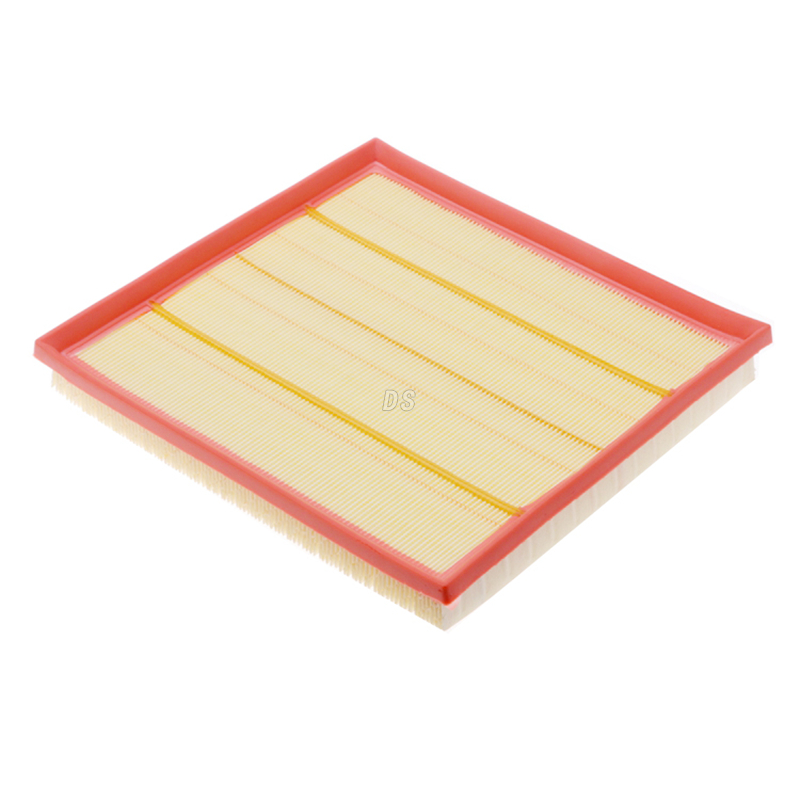
There are several practical reasons.
The first reason is cost and complexity. Adding dye adds a raw material cost, requires additional quality control to ensure consistent color, and may complicate the supply chain. For a component that is hidden inside an engine bay and regularly replaced, most manufacturers see no return on that investment.
The second reason is performance risk. Dyes are chemicals. Any chemical added to filter media has at least a small potential to affect fiber structure, bonding, or surface properties. In extreme cases, certain dyes could off-gas or react with humidity. While modern dyes can be formulated to be inert, validating a dyed media to the same performance standards as natural media takes time and money. Most manufacturers choose to avoid the risk entirely.
The third reason is customer expectation. White or off-white has become the industry norm. A brightly colored air filter — say red, blue, or green — might cause a technician to question whether it is genuine or some sort of specialty product. Breaking customer expectation for no functional benefit is rarely a wise business decision.
There is one notable exception: high-performance or "racing" air filters. Brands targeting the enthusiast market sometimes use colored filter media or colored outer wraps as a styling element. These products are often oiled cotton gauze designs rather than traditional dry paper media. The oil itself may be dyed, or the cotton may be pre-colored. In this niche, color becomes a brand identifier and a selling point. However, even in this segment, the vast majority of filters remain white or off-white because color is simply not a priority for most buyers.
Part Three: The Misleading Case of "Red Filters"
Some aftermarket filters are advertised as having "red" or "blue" media. In many cases, this is not the fiber color at all. It is the color of the filter oil applied to a cotton or foam media. Dry paper filters cannot be oiled, so they cannot change color in this way.
If you see a brightly colored dry paper filter, it has either been dyed during production or, in some lower-quality cases, painted. Painting a filter media is almost always harmful. Paint can clog pores, increase resistance, and introduce volatile compounds into the intake airstream. A reputable manufacturer would never paint a filter.
Part Four: Color as a Branding and Marketing Tool
Despite the practical barriers, there is a legitimate discussion to be had about using color strategically. In a commodity market where many air filters look identical, a unique color could help with brand recognition — but only if the color carries meaning.
For example, a manufacturer could use a very subtle tint to indicate a product line:
· Pale blue for standard economy filters
· Pale green for eco-friendly or recyclable filters
· Pale orange for heavy-duty or severe-duty filters
The key word here is pale. A strongly colored filter would not only be more expensive to produce but might also make contamination harder to read. A light color allows the natural darkening of dirt to remain visible. A dark-colored filter would hide that visual indicator, potentially leading to extended use beyond the recommended service life.
Some industrial and heavy-duty air filter manufacturers have experimented with this concept. A small number of specialty cabin air filters use activated carbon impregnated media, which is naturally dark gray or black. That color is not a dye but a material property. In engine air filters, however, colored media remains exceptionally rare.
Part Five: What Color Should You Look For?
From a purely functional standpoint, the color of a new air filter does not matter. Filtration efficiency, dust holding capacity, initial resistance, and dimensional fit are what determine quality. A white filter is not inherently better than a pale yellow filter, nor is a colored filter automatically inferior.
That said, there is one color that should raise concern: any filter with an inconsistent or blotchy color. If a new filter shows uneven coloration, streaking, or staining, it may indicate poor manufacturing consistency, improper storage such as moisture damage, or the use of recycled or contaminated raw materials. A uniform, clean appearance — regardless of the specific shade — is a basic indicator of quality.
Conclusion: Color Is Possible but Rarely Practical
So, can an air filter change color? Yes, in two ways. First, it darkens naturally with use as it traps contaminants. This unintentional color change is a helpful visual indicator of filter loading and potential intake system problems. Second, it is technically possible to manufacture filters in different colors by adding dyes to the media, but this is rare due to cost, performance considerations, and lack of customer demand.
For the vast majority of applications, the familiar white or off-white air filter remains the logical choice. It is simple to manufacture, easy to inspect, and trusted by mechanics worldwide. Color may have a place in niche racing products or future smart filter designs, but for now, the best color for an air filter is no color at all — just clean, consistent, high-performance media.

Qinghe County Dongsen Auto Parts Co., Ltd. is located in Qinghe County, Xingtai City, Hebei Province. It was established in 2024. Although the company was established a short time ago, it has more than 10 years of production experience. We are a manufacturer specializing in the production of air filters, air conditioning filters and oil filters. The filters produced by our factory serve the domestic and foreign markets and have won unanimous praise from customers in Southeast Asia, Africa, South America and other regions.